

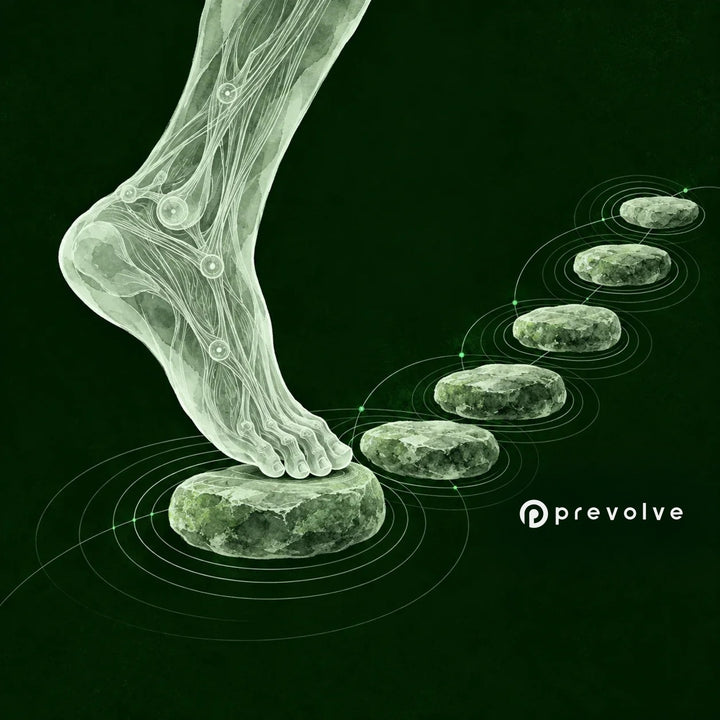
When it comes to crafting the perfect pair of cleats, no single size, or single design, fits everyone. At Prevolve Footwear, we believe your shoes should complement your unique foot strength and mobility, helping you perform at your peak while strengthening your body along the way. That is why we work out your foot strength level before we build your pair. Take our short foot strength assessment and it sets your level for you. Skipped it? You can set your level from your account after you order, and we'll check in before your pair goes into design.
But what does "foot strength level" actually mean, and why does it matter? Let's get into it.
Understanding foot strength levels
Your foot strength level reflects how accustomed your feet are to minimalist footwear or barefoot movement. Stronger, more robust feet need less cushioning and a more flexible plate than feet conditioned by years of traditional footwear. Here is how we define the levels:
-
Level 6: Give me the thinnest sole you got! I can run a mountain barefoot.
- Your feet are exceptionally strong and resilient. You've likely spent years running, training, or living barefoot or in minimalist footwear.
- Design impact: Our thinnest insole and thinnest cleat plate for maximum ground feel and responsiveness. Widest toe box, optimized for wide, natural splay.
-
Level 5: I spend all my time barefoot or in minimalist shoes.
- You're fully committed to minimalist living and your feet have adapted well to natural movement.
- Design impact: Thin insole with a moderately flexible plate. Generous toe box width for natural splay.
-
Level 4: I primarily wear minimalist shoes.
- You're accustomed to minimalist shoes but may occasionally switch to conventional footwear.
- Design impact: A balanced build with a slightly thicker insole and a cleat plate that still provides more flexibility than a conventional cleat plate, especially in the arch.
-
Level 3: I sometimes wear minimalist shoes, but still wear some conventionally designed footwear.
- You're experimenting with minimalist footwear but aren't fully transitioned.
- Design impact: Moderate cushioning and stiffness, with a toe box width slightly wider than the average cleat on the market.
-
Level 2: I've never worn minimalist shoes.
- You're new to the world of natural footwear, so your feet get more cushioning and a firmer plate while they adapt.
- Design impact: Conventional level of cushioning, stiff cleat plate similar to those found on the market (still a bit more flex in the arch), and a toe box that is close to the average shape on the market.
-
Level 1: I wear orthotics in all my shoes and look for the most cushioned shoe I can get.
- You prioritize maximum cushioning due to existing foot conditions or a history of wearing orthotics.
- Design impact: The thickest insole and cleat plate, and a toe box without added width.
Note that foot strength levels 1-6 are separate from our metpad levels 1-5, which describe the height of the metatarsal pad inside your insole.
How your foot strength level affects design
Your foot strength level is not just about comfort, it is about making sure your cleats work with your body instead of against it. Here is how your level shapes the design:
- Insole thickness: Stronger feet benefit from thinner insoles, allowing for more ground feedback and natural movement. Less conditioned feet need extra cushioning to reduce the demands placed on the foot and lower leg for force absorption.
- Plate stiffness: Insole and cleat plate stiffness adjust to your feet. Stronger feet need less stiffness because the foot can create its own rigidity by flexing the muscles. Less experienced feet get a stiffer plate, simply because that is what they are used to. My read is that a plate that bends with a strong foot lets the arch cushion each landing on its own, which should spare the knees some of the strain that builds into tendinitis. That flex only helps once the foot can control it, which is why levels 1 and 2 keep the firmer plate.
- Toe box width: As foot strength increases, your toe box widens to accommodate natural toe splay, encouraging better balance, stability, and power transfer.
Why it matters
Footwear that matches your foot strength promotes natural biomechanics, reducing injury risk and enhancing athletic performance. Whether you are an elite athlete or just starting your minimalist journey, getting your foot strength level right makes sure your cleats feel like an extension of your body rather than a constraint on it.
Ready to customize your perfect cleats?
Your foot strength level is a key input in building cleats designed specifically for you. The quickest way to find it is the foot strength assessment: about four minutes, no account needed. Already ordered? Your level lives in your account, where you can adjust it any time before design starts. Still unsure? Our team is here to help. Together, we will make sure your cleats empower your feet and your game.

As your feet get stronger, our design responds, climb the ladder one custom cleat at a time.
