Kostenloser USA-Versand auf alle Bestellungen

Die fünf Dinge, die ein Fuß tut
Nimm eines davon weg, und die anderen werden schlechter in ihrer Aufgabe.
Deine Fußsohle ist ein Sinnesorgan
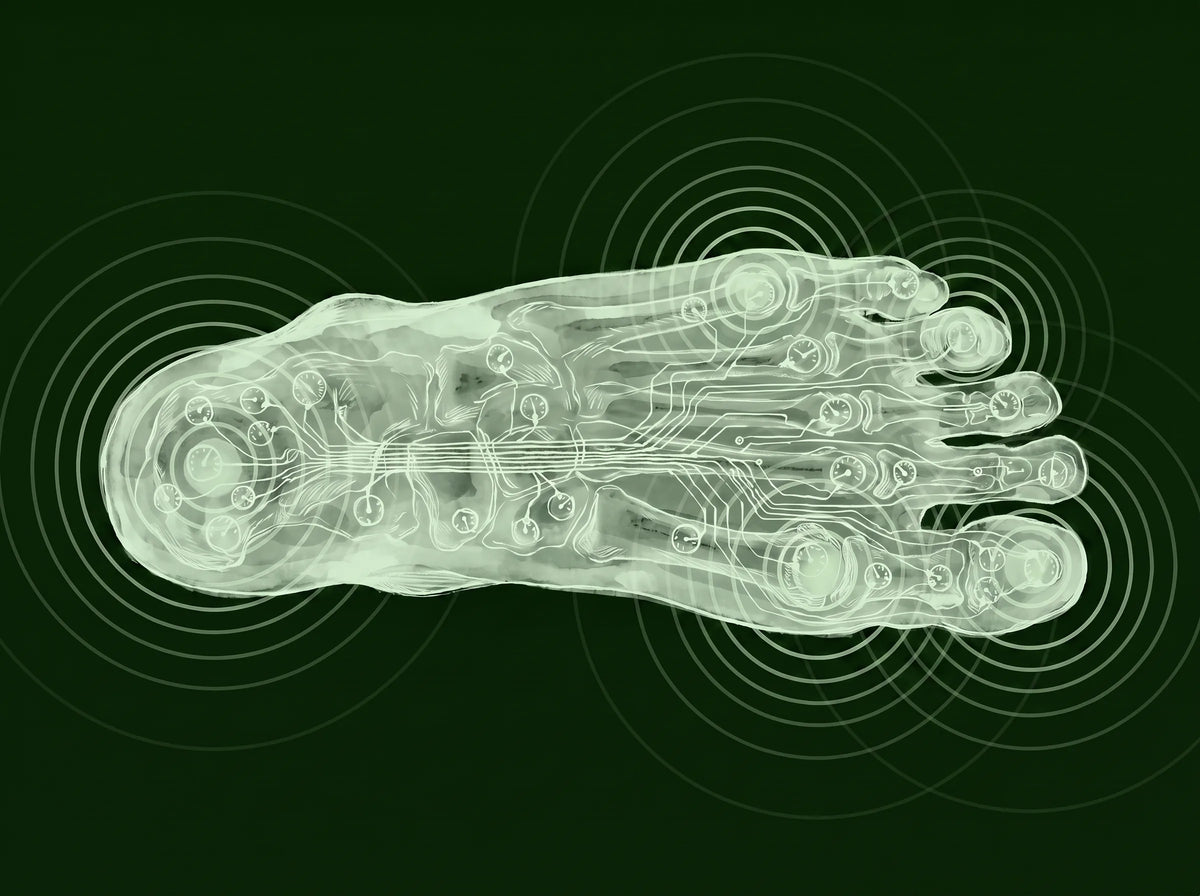
Die Haut unter deinem Fuß ist dicht mit Mechanorezeptoren durchsetzt, die Druck, Textur, Rutschen und Oberflächenwinkel kontinuierlich an dein Nervensystem melden. Dieser Datenstrom trägt dazu bei, dass du im Gleichgewicht bleibst. Forscher beschreiben den Fuß als „Sinnessystem zur Haltungsregulierung“ und zeigen, dass verbessertes plantares Feedback das Gleichgewicht messbar verbessert.
Schiebst du eine dicke, steife, gepolsterte Platte zwischen diese Haut und den Boden, schwächst du das Signal ab. Der Fuß funktioniert trotzdem, nur mit weniger Informationen.
Deine Fußsohle ist ein Sinnesorgan
Die Haut unter deinem Fuß ist dicht mit Mechanorezeptoren durchsetzt, die Druck, Textur, Rutschen und Oberflächenwinkel kontinuierlich an dein Nervensystem melden. Dieser Datenstrom trägt dazu bei, dass du im Gleichgewicht bleibst. Forscher beschreiben den Fuß als „Sinnessystem zur Haltungsregulierung“ und zeigen, dass verbessertes plantares Feedback das Gleichgewicht messbar verbessert.
Schiebst du eine dicke, steife, gepolsterte Platte zwischen diese Haut und den Boden, schwächst du das Signal ab. Der Fuß funktioniert trotzdem, nur mit weniger Informationen.
Breite ist Struktur, nicht Komfort
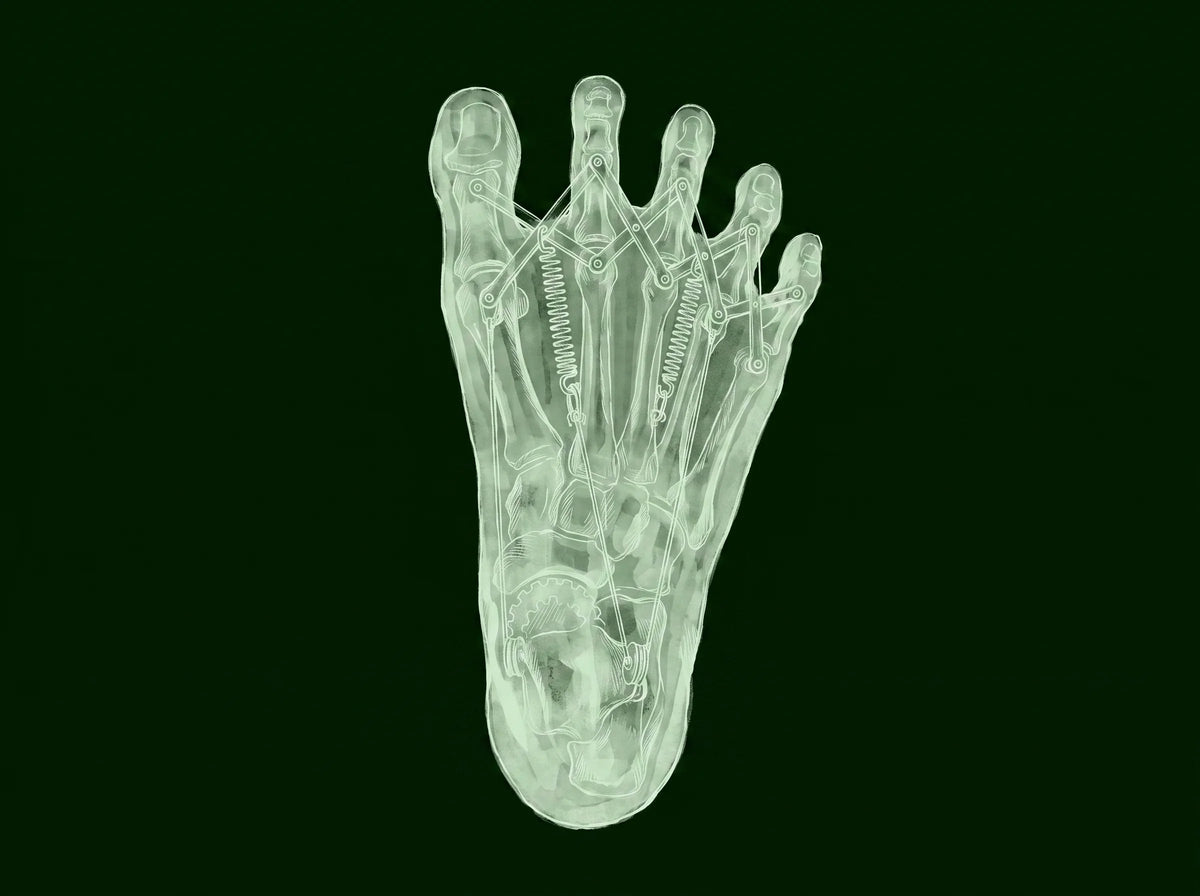
Wenn du deinen Fuß belastest, sollen sich die Zehen spreizen. Diese Spreizung verbreitert deine Basis und aktiviert zwei bestimmte Muskeln: den Abductor hallucis am großen Zeh und den Abductor digiti minimi am kleinen Zeh.
Genau dort zeigt sich der Unterschied. Beim Vergleich von Männern mit minimalistischem Schuhwerk und Männern mit konventionellem Schuhwerk fanden Forscher heraus, dass die Gruppe mit minimalistischem Schuhwerk einen größeren Abductor hallucis und Abductor digiti minimi sowie höhere, stabilere Fußgewölbe hatte. Die Größe des Abductor hallucis sagte voraus, wie steif das Fußgewölbe beim Gehen blieb.
Eine spitz zulaufende Zehenbox hält beide Muskeln in jeder Stunde, die du den Schuh trägst, in einer verkürzten Position.
Breite ist Struktur, nicht Komfort
Wenn du deinen Fuß belastest, sollen sich die Zehen spreizen. Diese Spreizung verbreitert deine Basis und aktiviert zwei bestimmte Muskeln: den Abductor hallucis am großen Zeh und den Abductor digiti minimi am kleinen Zeh.
Genau dort zeigt sich der Unterschied. Beim Vergleich von Männern mit minimalistischem Schuhwerk und Männern mit konventionellem Schuhwerk fanden Forscher heraus, dass die Gruppe mit minimalistischem Schuhwerk einen größeren Abductor hallucis und Abductor digiti minimi sowie höhere, stabilere Fußgewölbe hatte. Die Größe des Abductor hallucis sagte voraus, wie steif das Fußgewölbe beim Gehen blieb.
Eine spitz zulaufende Zehenbox hält beide Muskeln in jeder Stunde, die du den Schuh trägst, in einer verkürzten Position.
Das Fußgewölbe ist die Feder des Katapults
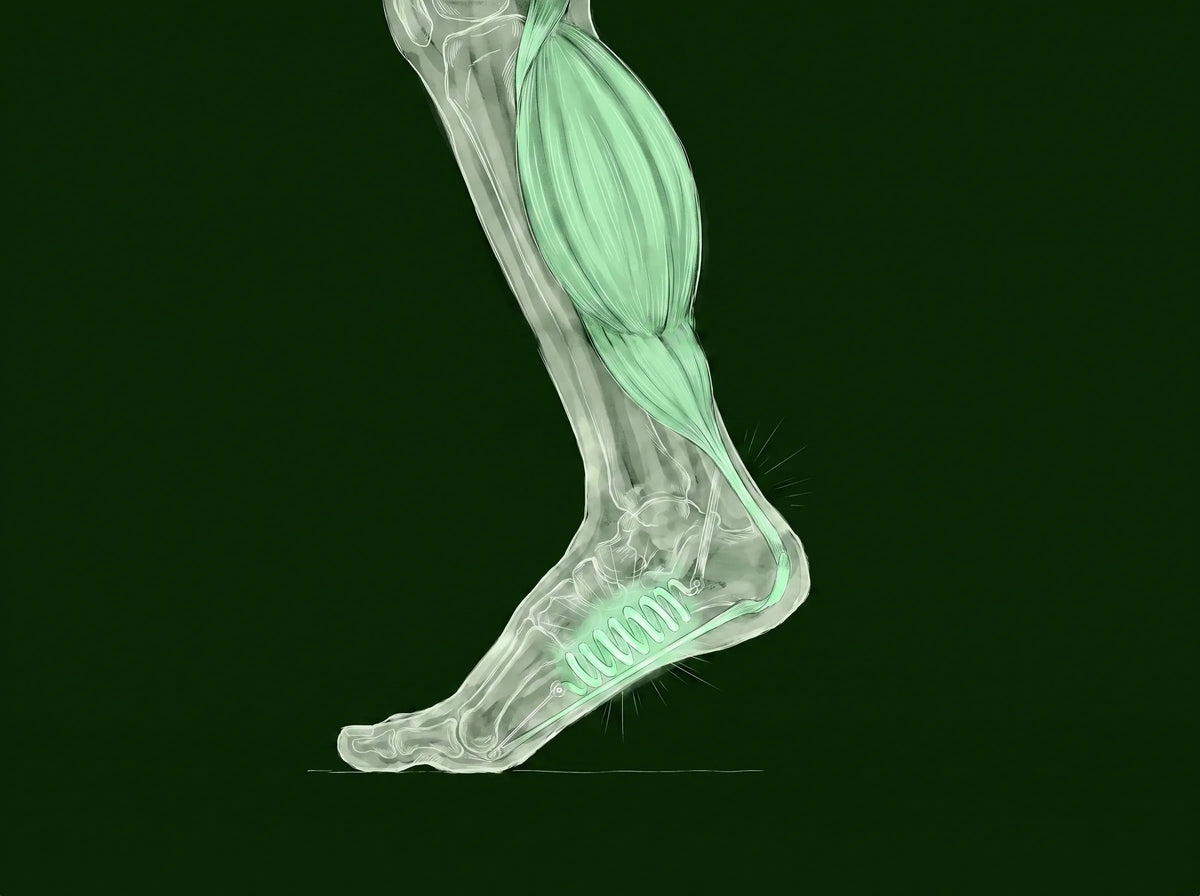
Deine drei Gewölbe bilden zusammen mit der Plantarfaszie und der Achillessehne ein elastisches System. Es komprimiert sich beim Landen, speichert diese Energie und gibt sie beim Abdruck wieder ab. Ker und Kollegen maßen das 1987 in Nature: Allein das Fußgewölbe speichert und gibt rund 17% der mechanischen Energie des Laufens zurück. Sie beschrieben den Fuß als etwas, das wie ein Gummiball dahinhüpft.
Die Feder hat einen Motor: deine Wade. Fukunaga und Kollegen legten 2001 Ultraschall an gehende Beine an und fanden heraus, dass die Wade dabei fast isometrisch arbeitet. Ihre Fasern bleiben nahezu unbewegt und verankern die Achillessehne, während die Sehne das Dehnen und Zurückfedern übernimmt, wie ein Katapult, das gespannt und losgelassen wird. Modellierungen bei Läufern zeigen, dass dieses Zurückfedern bis zu drei Viertel der positiven Arbeit von Wade und Achillessehne zusammen ausmacht. Deine Wade ist so groß, wie sie ist, weil es harte Arbeit ist, diese Spannung Schritt für Schritt gegen dein gesamtes Körpergewicht zu halten.
Eine Feder funktioniert nur, wenn sie sich verformen und zurückfedern darf. Stützt du sie künstlich, nimmst du dem Gewebe Last ab, und damit auch den Reiz, der es stark hält.
Das Fußgewölbe ist die Feder des Katapults
Deine drei Gewölbe bilden zusammen mit der Plantarfaszie und der Achillessehne ein elastisches System. Es komprimiert sich beim Landen, speichert diese Energie und gibt sie beim Abdruck wieder ab. Ker und Kollegen maßen das 1987 in Nature: Allein das Fußgewölbe speichert und gibt rund 17% der mechanischen Energie des Laufens zurück. Sie beschrieben den Fuß als etwas, das wie ein Gummiball dahinhüpft.
Die Feder hat einen Motor: deine Wade. Fukunaga und Kollegen legten 2001 Ultraschall an gehende Beine an und fanden heraus, dass die Wade dabei fast isometrisch arbeitet. Ihre Fasern bleiben nahezu unbewegt und verankern die Achillessehne, während die Sehne das Dehnen und Zurückfedern übernimmt, wie ein Katapult, das gespannt und losgelassen wird. Modellierungen bei Läufern zeigen, dass dieses Zurückfedern bis zu drei Viertel der positiven Arbeit von Wade und Achillessehne zusammen ausmacht. Deine Wade ist so groß, wie sie ist, weil es harte Arbeit ist, diese Spannung Schritt für Schritt gegen dein gesamtes Körpergewicht zu halten.
Eine Feder funktioniert nur, wenn sie sich verformen und zurückfedern darf. Stützt du sie künstlich, nimmst du dem Gewebe Last ab, und damit auch den Reiz, der es stark hält.
Kraft verlässt deinen Körper über die Zehen
Die Zehen sind nicht nur Beiwerk. In einer Messung an 160 Personen hatten sie rund drei Viertel der Standphase Bodenkontakt und erzeugten Spitzendrücke, die mit denen der Mittelfußköpfchen vergleichbar sind.
Sie lassen sich auch trainieren, und das wirkt sich auf die Leistung aus. Sieben Wochen Krafttraining der Zehenbeuger verdoppelten in etwa die Gelenkkraft und brachten 6 cm mehr Weite beim Standweitsprung. Die Kraft der Zehenbeuger korreliert mit der Sprunghöhe. Bei College-Footballspielern korrelierte die Abdruckkraft der Zehen mit den Zeiten im Pro-Agility- und 3-Cone-Test, nicht aber mit dem geradlinigen Sprint. Es geht also speziell um Richtungswechsel und Abstoppen.
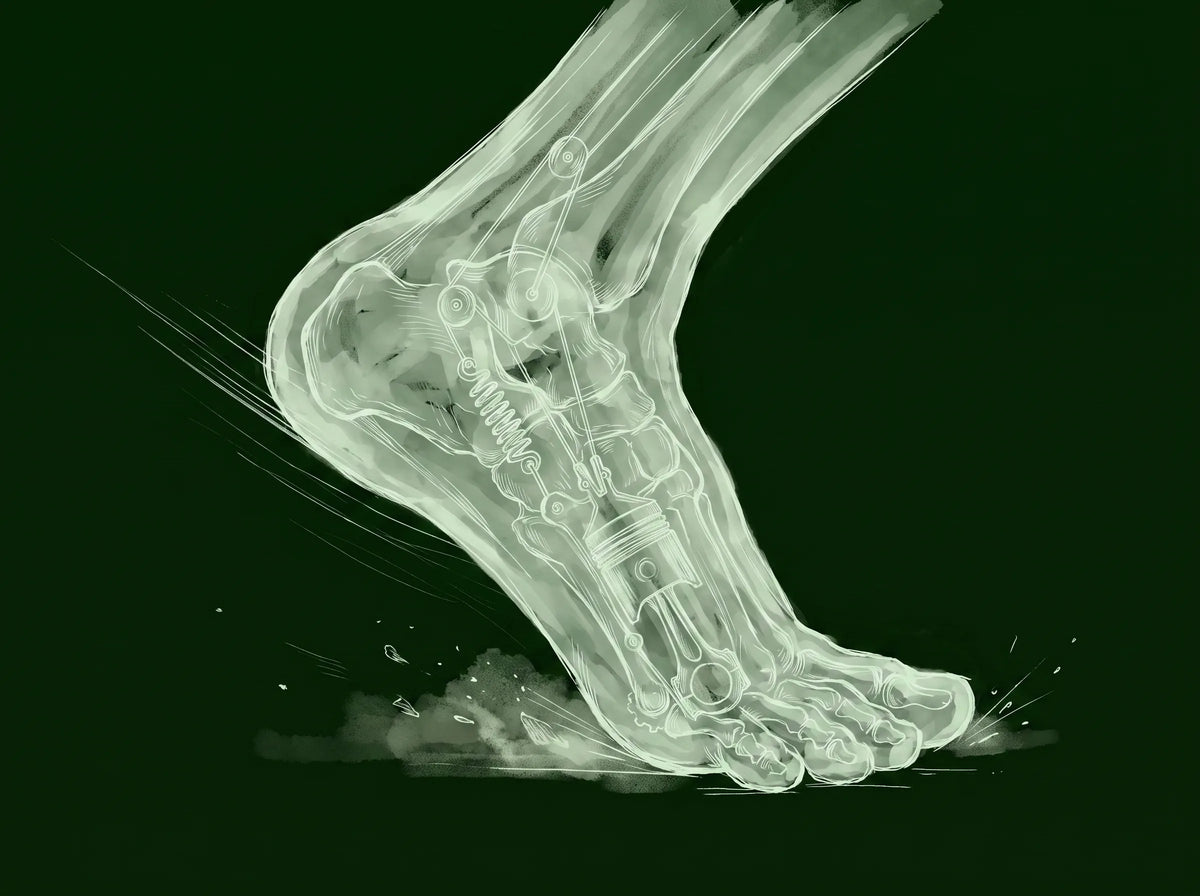
Hier trifft dein Fuß auf alles, was darüber liegt. Das Zehengelenk ist das letzte Bindeglied zwischen den großen kraftgebenden Muskeln und dem Boden, gegen den sie sich abstoßen. Ein Fuß, der Kraft nicht übertragen kann, verschenkt also, was deine Hüfte erzeugt.
Kraft verlässt deinen Körper über die Zehen
Die Zehen sind nicht nur Beiwerk. In einer Messung an 160 Personen hatten sie rund drei Viertel der Standphase Bodenkontakt und erzeugten Spitzendrücke, die mit denen der Mittelfußköpfchen vergleichbar sind.
Sie lassen sich auch trainieren, und das wirkt sich auf die Leistung aus. Sieben Wochen Krafttraining der Zehenbeuger verdoppelten in etwa die Gelenkkraft und brachten 6 cm mehr Weite beim Standweitsprung. Die Kraft der Zehenbeuger korreliert mit der Sprunghöhe. Bei College-Footballspielern korrelierte die Abdruckkraft der Zehen mit den Zeiten im Pro-Agility- und 3-Cone-Test, nicht aber mit dem geradlinigen Sprint. Es geht also speziell um Richtungswechsel und Abstoppen.
Hier trifft dein Fuß auf alles, was darüber liegt. Das Zehengelenk ist das letzte Bindeglied zwischen den großen kraftgebenden Muskeln und dem Boden, gegen den sie sich abstoßen. Ein Fuß, der Kraft nicht übertragen kann, verschenkt also, was deine Hüfte erzeugt.
Füße reagieren auf Belastung wie jeder andere Muskel
Sechs Monate gewöhnlicher Alltagsaktivität in minimalistischem Schuhwerk steigerten die Fußkraft im Schnitt um 57%, und das allein durch alltägliches Tragen, nicht durch Training.
In einer separaten randomisierten Studie mit 57 Läufern war das bloße Gehen in minimalistischen Schuhen genauso wirksam wie gezielte Fußkräftigungsübungen. Beide Gruppen gewannen über acht Wochen an Muskelmasse und -kraft. Die Kontrollgruppe gewann nichts.
Das ist, was reine passive Belastung allein bringt. Gezieltes Training legt noch eins drauf: Sieben Wochen intensives Training der Zehenbeuger verdoppelten annähernd die Gelenkkraft bei Erwachsenen, die bereits normale Füße hatten, und brachten beim Sprung aus dem Stand 6cm mehr.

Füße reagieren auf Belastung wie jeder andere Muskel
Sechs Monate gewöhnlicher Alltagsaktivität in minimalistischem Schuhwerk steigerten die Fußkraft im Schnitt um 57%, und das allein durch alltägliches Tragen, nicht durch Training.
In einer separaten randomisierten Studie mit 57 Läufern war das bloße Gehen in minimalistischen Schuhen genauso wirksam wie gezielte Fußkräftigungsübungen. Beide Gruppen gewannen über acht Wochen an Muskelmasse und -kraft. Die Kontrollgruppe gewann nichts.
Das ist, was reine passive Belastung allein bringt. Gezieltes Training legt noch eins drauf: Sieben Wochen intensives Training der Zehenbeuger verdoppelten annähernd die Gelenkkraft bei Erwachsenen, die bereits normale Füße hatten, und brachten beim Sprung aus dem Stand 6cm mehr.
0
Ballenzehen, gefunden in einer Umfrage von 1949 unter 5.128 Menschen, die nie Schuhe getragen hatten.
Eine Umfrage dieser Größenordnung ist keine moderne Epidemiologie, aber null ist eine eindrucksvolle Zahl.¹⁴
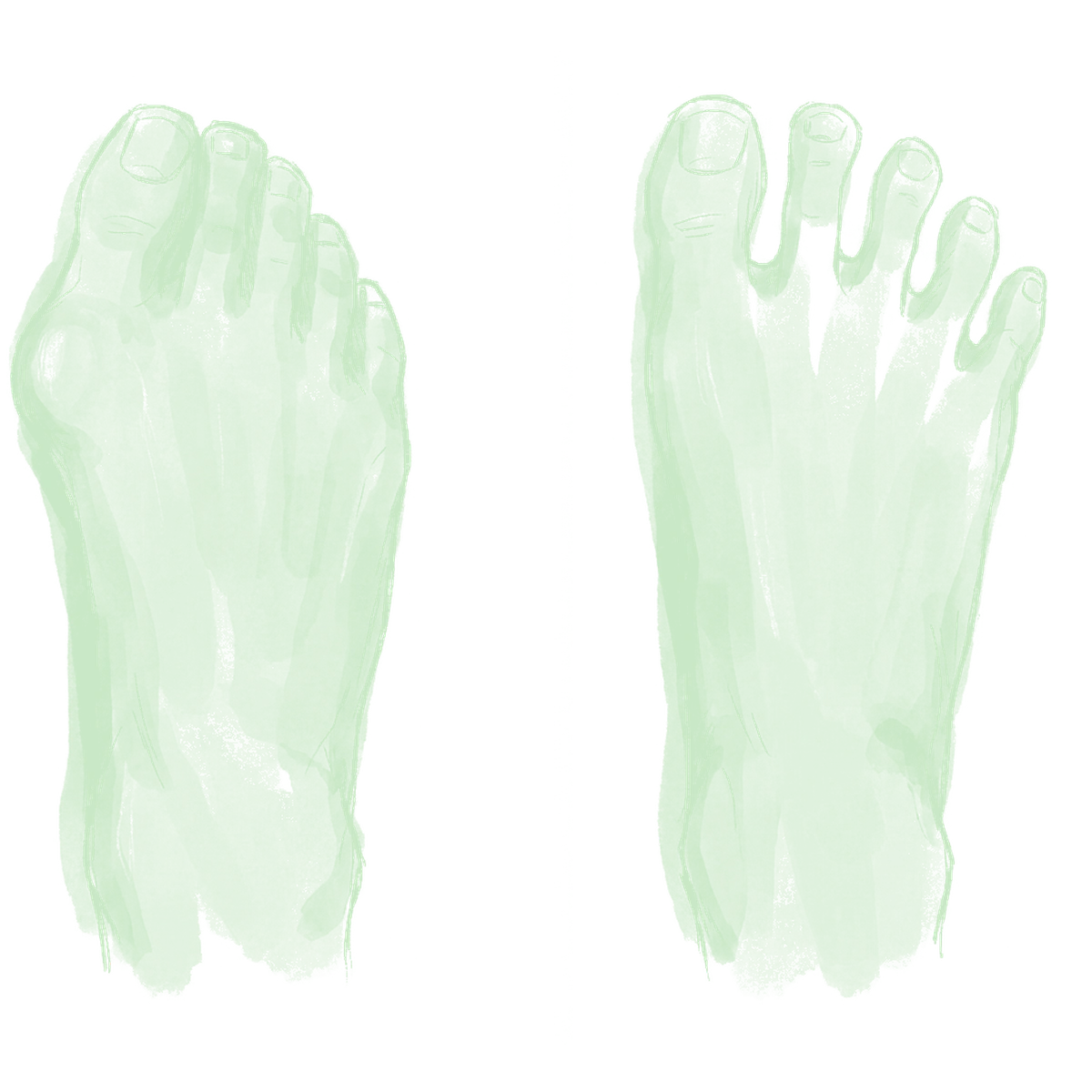
Tiefer eintauchen:
Ballenzehen & der große Zeh
Hallux valgus ist der medizinische Fachbegriff für den nach innen gebogenen großen Zeh.
Kliniker messen den Hallux-valgus-Winkel: die Abwinkelung, an der dein großer Zeh auf den Fuß trifft. Jenseits von 15 Grad beginnt der Ballenzeh. Das ist keine Seltenheit: 23% der Erwachsenen sind betroffen, bei über 65-Jährigen steigt der Anteil auf 36%, und Frauen sind mehr als doppelt so häufig betroffen wie Männer.¹⁰ In einer Auswertung von einer halben Million 3D-Scans lag der durchschnittliche Winkel bei Frauen in jeder untersuchten Region höher als bei Männern.¹¹
Füße, die nie Schuhe getragen haben, erzählen die andere Hälfte der Geschichte. Barfuß aufgewachsene Kinder haben höhere Fußgewölbe und geradere große Zehen als gleichaltrige, gleich aufgewachsene Kinder mit Schuhen.¹² Barfuß lebende Erwachsene haben breitere Füße, am breitesten im Bereich der Zehen.¹³
Der Winkel ist wichtig, weil der große Zeh das letzte Glied in der Antriebskette ist. Die Kraft jedes Schritts beginnt in deinen Gesäßmuskeln und wandert über die Oberschenkel, die Wade und den Fuß nach unten, und all diese Kraft verlässt deinen Körper durch das, was beim Abdruck den Boden berührt. Meist ist das der große Zeh. Ein gerade ausgerichteter Zeh kann den Boden direkt belasten und die Kraft weitergeben. Ein nach innen gebogener Zeh drückt sich über seine Seite ab, und Energie, die von deinen größten Muskeln aufgebaut wurde, geht genau am letzten Glied verloren.
Die gute Nachricht: Die Spreizung ist trainierbar. Gib den Zehen Raum, belaste sie, und halte den Raum optional mit Zehenspreizern. Die Studienlage stützt Zehenspreizer in Kombination mit Übungen, nicht als alleinige Lösung, weshalb unsere direkt mit einem Trainingsplan geliefert werden.
Unsere werden aus deinem eigenen Fußscan gedruckt: 3D-maßgefertigte Zehenspreizer.
Tiefer eintauchen:
Ballenzehen & der große Zeh
Hallux valgus ist der medizinische Fachbegriff für den nach innen gebogenen großen Zeh.
Kliniker messen den Hallux-valgus-Winkel: die Abwinkelung, an der dein großer Zeh auf den Fuß trifft. Jenseits von 15 Grad beginnt der Ballenzeh. Das ist keine Seltenheit: 23% der Erwachsenen sind betroffen, bei über 65-Jährigen steigt der Anteil auf 36%, und Frauen sind mehr als doppelt so häufig betroffen wie Männer.¹⁰ In einer Auswertung von einer halben Million 3D-Scans lag der durchschnittliche Winkel bei Frauen in jeder untersuchten Region höher als bei Männern.¹¹
Füße, die nie Schuhe getragen haben, erzählen die andere Hälfte der Geschichte. Barfuß aufgewachsene Kinder haben höhere Fußgewölbe und geradere große Zehen als gleichaltrige, gleich aufgewachsene Kinder mit Schuhen.¹² Barfuß lebende Erwachsene haben breitere Füße, am breitesten im Bereich der Zehen.¹³
Der Winkel ist wichtig, weil der große Zeh das letzte Glied in der Antriebskette ist. Die Kraft jedes Schritts beginnt in deinen Gesäßmuskeln und wandert über die Oberschenkel, die Wade und den Fuß nach unten, und all diese Kraft verlässt deinen Körper durch das, was beim Abdruck den Boden berührt. Meist ist das der große Zeh. Ein gerade ausgerichteter Zeh kann den Boden direkt belasten und die Kraft weitergeben. Ein nach innen gebogener Zeh drückt sich über seine Seite ab, und Energie, die von deinen größten Muskeln aufgebaut wurde, geht genau am letzten Glied verloren.
Die gute Nachricht: Die Spreizung ist trainierbar. Gib den Zehen Raum, belaste sie, und halte den Raum optional mit Zehenspreizern. Die Studienlage stützt Zehenspreizer in Kombination mit Übungen, nicht als alleinige Lösung, weshalb unsere direkt mit einem Trainingsplan geliefert werden.
Unsere werden aus deinem eigenen Fußscan gedruckt: 3D-maßgefertigte Zehenspreizer.
0
Ballenzehen, gefunden in einer Umfrage von 1949 unter 5.128 Menschen, die nie Schuhe getragen hatten.
Eine Umfrage dieser Größenordnung ist keine moderne Epidemiologie, aber null ist eine eindrucksvolle Zahl.¹⁴
Keine zwei Füße sind gleich
Lass deine Füße scannenWas 1.2 Millionen Scans zeigen
Volumental, der Scanner hinter unseren Fußscans, hat eine Analyse von 1.2 Millionen 3D-Fußscans veröffentlicht. Bei Menschen mit gleicher Fußlänge liegen die mittleren 90% innerhalb einer Weitenspanne von 16 mm, und eine Standardweite passt höchstens 40% von ihnen. Die meisten Schuhe werden in genau einer Weite verkauft.⁷
Und das zeigt sich an echten Füßen
Übersichtsarbeiten zu Passform-Studien zeigen, dass 63 bis 72% der Menschen Schuhe tragen, die nicht zur Länge oder Breite ihres Fußes passen.⁸ Bei Menschen, deren Schuhe nicht zu ihren Füßen passen, gibt es bei 60% zudem einen Unterschied von mindestens einer halben Größe zwischen dem eigenen linken und rechten Fuß.⁹ Passform ist kein Detail eines Schuhs. Sie ist das Produkt.
40%
Menschen, denen eine Standardschuhweite innerhalb einer Größe höchstens passt⁷
72%
der Menschen tragen Schuhe, die nicht zur Länge oder Breite ihres Fußes passen⁸
60%
der Menschen mit unpassenden Schuhen haben zudem unterschiedlich große linke und rechte Füße⁹
Minimalismus braucht einen Übergangsplan
Der ehrliche Teil: deine Füße sind wahrscheinlich noch nicht so weit, und wer das überstürzt, verletzt sich.
Die Warnung
In einer Studie aus dem Jahr 2013 stiegen 36 erfahrene Läufer über zehn Wochen hinweg auf Minimalschuhe um, schrittweise, wie geplant. Anschließende MRT-Scans zeigten bei 10 der 19 Umsteiger ein erhöhtes Knochenmarködem, gegenüber 1 von 17, die bei herkömmlichen Schuhen blieben. Auf der verwendeten Skala markiert ein Ermüdungsbruch den höchsten Wert.
Das ist kein Argument gegen minimalistisches Schuhwerk. Es ist ein Argument gegen einen unvorbereiteten Einstieg.
Die Dämpfungsfalle
Es gibt eine zweite Falle, die man beim Namen nennen sollte. Dämpfung sorgt nicht für einen weicheren Aufsatz. Als Forscher Läufer in stark gedämpfte Schuhe steckten, versteiften sich ihre Beine beim Aufsetzen, und die Aufprallbelastung stieg, bei Tempo sogar um 10 bis 12 Prozent, statt zu sinken. Genau dieses Aufsatzmuster muss ein Übergang über Jahre hinweg wieder verlernen. Die Warnung kommt erst, wenn der Schaden bereits entstanden ist.
Genau deshalb gibt es die Fußanalyse. Sie gibt dir eine Zahl dafür, wo deine Füße wirklich stehen, und den passenden Übergangsplan dazu.
Die Warnung
In einer Studie aus dem Jahr 2013 stiegen 36 erfahrene Läufer über zehn Wochen hinweg auf Minimalschuhe um, schrittweise, wie geplant. Anschließende MRT-Scans zeigten bei 10 der 19 Umsteiger ein erhöhtes Knochenmarködem, gegenüber 1 von 17, die bei herkömmlichen Schuhen blieben. Auf der verwendeten Skala markiert ein Ermüdungsbruch den höchsten Wert.
Das ist kein Argument gegen minimalistisches Schuhwerk. Es ist ein Argument gegen einen unvorbereiteten Einstieg.
Die Dämpfungsfalle
Es gibt eine zweite Falle, die man beim Namen nennen sollte. Dämpfung sorgt nicht für einen weicheren Aufsatz. Als Forscher Läufer in stark gedämpfte Schuhe steckten, versteiften sich ihre Beine beim Aufsetzen, und die Aufprallbelastung stieg, bei Tempo sogar um 10 bis 12 Prozent, statt zu sinken. Genau dieses Aufsatzmuster muss ein Übergang über Jahre hinweg wieder verlernen. Die Warnung kommt erst, wenn der Schaden bereits entstanden ist.
Genau deshalb gibt es die Fußanalyse. Sie gibt dir eine Zahl dafür, wo deine Füße wirklich stehen, und den passenden Übergangsplan dazu.
Kurze Belastungen, vollständige Erholung
Die Tragezeit wird in Stunden gemessen, nicht in Einheiten. In dieser Phase fühlt sich alles gut an, genau deshalb übertreiben es viele.
Die Belastung steigt, langsam
Der Zeitraum, den dein 6-wöchiges Trainingsprogramm abdeckt. Etwas Ermüdung in Fußgewölbe und Wade ist zu erwarten und genau das ist der Punkt. Scharfer oder lokal begrenzter Knochenschmerz ist es nicht: Diese Unterscheidung zählt mehr als jeder Zeitplan.
Richtig darin trainieren
Muskelgröße und -kraft verändern sich in den Studiendaten messbar ab etwa Woche 8. Volle Trainingseinheiten werden realistisch.
Angepasst
Die Marke von +57 % in den Studiendaten, erreicht allein durch alltägliches Tragen. Gezieltes Training baut von hier aus weiter auf.
Kurze Belastungen, vollständige Erholung
Die Tragezeit wird in Stunden gemessen, nicht in Einheiten. In dieser Phase fühlt sich alles gut an, genau deshalb übertreiben es viele.
Die Belastung steigt, langsam
Der Zeitraum, den dein 6-wöchiges Trainingsprogramm abdeckt. Etwas Ermüdung in Fußgewölbe und Wade ist zu erwarten und genau das ist der Punkt. Scharfer oder lokal begrenzter Knochenschmerz ist es nicht: Diese Unterscheidung zählt mehr als jeder Zeitplan.
Richtig darin trainieren
Muskelgröße und -kraft verändern sich in den Studiendaten messbar ab etwa Woche 8. Volle Trainingseinheiten werden realistisch.
Angepasst
Die Marke von +57 % in den Studiendaten, erreicht allein durch alltägliches Tragen. Gezieltes Training baut von hier aus weiter auf.
6
Fußkraftniveaus, von Grundlagen bis zu Elite-Füßen
Die Fußanalyse bewertet deine Füße anhand von Fußkondition, Zehenkraft und Beweglichkeit sowie Kniebeuge und Balance, ordnet dich einem Level zu und gibt dir das dafür geschriebene 6-Wochen-Trainingsprogramm. Kostenlos, plus 100 $ Rabatt auf ein beliebiges Paar maßgefertigte Fußballschuhe oder Schuhe.
6
Fußkraftniveaus, von Grundlagen bis zu Elite-Füßen
Die Fußanalyse bewertet deine Füße anhand von Fußkondition, Zehenkraft und Beweglichkeit sowie Kniebeuge und Balance, ordnet dich einem Level zu und gibt dir das dafür geschriebene 6-Wochen-Trainingsprogramm. Kostenlos, plus 100 $ Rabatt auf ein beliebiges Paar maßgefertigte Fußballschuhe oder Schuhe.
Faire Fragen
Quellen
Curtis R, Willems C, Paoletti P, D'Août K. Daily activity in minimal footwear increases foot strength. Sci Rep. 2021;11(1):18648. PMID: 34545114.
Ridge ST, Olsen MT, Bruening DA, Jurgensmeier K, Griffin D, Davis IS, Johnson AW. Walking in minimalist shoes is effective for strengthening foot muscles. Med Sci Sports Exerc. 2019;51(1):104–113. PMID: 30113521.
Holowka NB, Wallace IJ, Lieberman DE. Foot strength and stiffness are related to footwear use in a comparison of minimally- vs. conventionally-shod populations. Sci Rep. 2018;8(1):3679. PMID: 29487321.
Ker RF, Bennett MB, Bibby SR, Kester RC, Alexander RM. The spring in the arch of the human foot. Nature. 1987;325:147–149. PMID: 3808070.
Fukunaga T, Kubo K, Kawakami Y, Fukashiro S, Kanehisa H, Maganaris CN. In vivo behaviour of human muscle tendon during walking. Proc Biol Sci. 2001;268(1464):229–233. PMID: 11217891.
Lai A, Schache AG, Lin YC, Pandy MG. Tendon elastic strain energy in the human ankle plantar-flexors and its role with increased running speed. J Exp Biol. 2014;217(17):3159–3168. PMID: 24948642.
McKeon PO, Hertel J, Bramble D, Davis I. The foot core system: a new paradigm for understanding intrinsic foot muscle function. Br J Sports Med. 2015;49(5):290. PMID: 24659509.
Jurca A, Žabkar J, Džeroski S. Analysis of 1.2 million foot scans from North America, Europe and Asia. Sci Rep. 2019;9:19155. PMID: 31844106.
Buldt AK, Menz HB. Incorrectly fitted footwear, foot pain and foot disorders. J Foot Ankle Res. 2018;11:43. PMID: 30065787.
Chen X, et al. Foot and shoe size mismatch in three different New York City populations. J Foot Ankle Surg. 2011. PMID: 21616688.
Nix S, Smith M, Vicenzino B. Prevalence of hallux valgus in the general population: a systematic review and meta-analysis. J Foot Ankle Res. 2010;3:21. PMID: 20868524.
Hughes J, Clark P, Klenerman L. The importance of the toes in walking. J Bone Joint Surg Br. 1990;72(2):245–251. PMID: 2312564.
Goldmann JP, Sanno M, Willwacher S, Heinrich K, Brüggemann GP. The potential of toe flexor muscles to enhance performance. J Sports Sci. 2013;31(4):424–433. PMID: 23106289.
Yamauchi J, Koyama K. Importance of toe flexor strength in vertical jump performance. J Biomech. 2020;104:109719. PMID: 32173032.
Yuasa Y, Kurihara T, Isaka T. Relationship between toe muscular strength and the ability to change direction in athletes. J Hum Kinet. 2018;64:47–55. PMID: 30429898.
Ridge ST, Johnson AW, Mitchell UH, Hunter I, Robinson E, Rich BSE, Brown SD. Foot bone marrow edema after a 10-wk transition to minimalist running shoes. Med Sci Sports Exerc. 2013;45(7):1363–1368. PMID: 23439417.
Zech A, Argubi-Wollesen A, Rahlf AL. Minimalist, standard and no footwear on static and dynamic postural stability following jump landing. Eur J Sport Sci. 2015;15(4):279–285. PMID: 25010996.
Viseux F, Lemaire A, Barbier F, Charpentier P, Leteneur S, Villeneuve P. How can the stimulation of plantar cutaneous receptors improve postural control? Neurophysiol Clin. 2019;49(3):263–268. PMID: 30639034.
Kulmala JP, Kosonen J, Nurminen J, Avela J. Running in highly cushioned shoes increases leg stiffness and amplifies impact loading. Sci Rep. 2018;8(1):17496. PMID: 30504822.
Rodríguez-Longobardo C, Gómez-Ruano MÁ, Canosa-Carro L. Effects of barefoot and minimalist footwear strength-oriented training on foot structure and function in athletic populations: a systematic review. J Clin Med. 2025;14(21). PMID: 41227025.
Jiao Y, Džeroski S, Jurca A. Analysis of hallux valgus angles automatically extracted from 3D foot scans. Ergonomics. 2023;66(8):1164–1175. PMID: 36269073.
Hollander K, et al. Growing-up (habitually) barefoot influences the development of foot and arch morphology in children and adolescents. Sci Rep. 2017;7:8079. PMID: 28808276.
D'Août K, et al. The effects of habitual footwear use: foot shape and function in native barefoot walkers. Footwear Sci. 2009;1(2):81–94.
Shulman SB. Survey in China and India of feet that have never worn shoes. J Natl Assoc Chiropodists. 1949;49:26–30.
Curtis R, Willems C, Paoletti P, D'Août K. Daily activity in minimal footwear increases foot strength. Sci Rep. 2021;11(1):18648. PMID: 34545114.
Ridge ST, Olsen MT, Bruening DA, Jurgensmeier K, Griffin D, Davis IS, Johnson AW. Walking in minimalist shoes is effective for strengthening foot muscles. Med Sci Sports Exerc. 2019;51(1):104–113. PMID: 30113521.
Holowka NB, Wallace IJ, Lieberman DE. Foot strength and stiffness are related to footwear use in a comparison of minimally- vs. conventionally-shod populations. Sci Rep. 2018;8(1):3679. PMID: 29487321.
Ker RF, Bennett MB, Bibby SR, Kester RC, Alexander RM. The spring in the arch of the human foot. Nature. 1987;325:147–149. PMID: 3808070.
Fukunaga T, Kubo K, Kawakami Y, Fukashiro S, Kanehisa H, Maganaris CN. In vivo behaviour of human muscle tendon during walking. Proc Biol Sci. 2001;268(1464):229–233. PMID: 11217891.
Lai A, Schache AG, Lin YC, Pandy MG. Tendon elastic strain energy in the human ankle plantar-flexors and its role with increased running speed. J Exp Biol. 2014;217(17):3159–3168. PMID: 24948642.
McKeon PO, Hertel J, Bramble D, Davis I. The foot core system: a new paradigm for understanding intrinsic foot muscle function. Br J Sports Med. 2015;49(5):290. PMID: 24659509.
Jurca A, Žabkar J, Džeroski S. Analysis of 1.2 million foot scans from North America, Europe and Asia. Sci Rep. 2019;9:19155. PMID: 31844106.
Buldt AK, Menz HB. Incorrectly fitted footwear, foot pain and foot disorders. J Foot Ankle Res. 2018;11:43. PMID: 30065787.
Chen X, et al. Foot and shoe size mismatch in three different New York City populations. J Foot Ankle Surg. 2011. PMID: 21616688.
Nix S, Smith M, Vicenzino B. Prevalence of hallux valgus in the general population: a systematic review and meta-analysis. J Foot Ankle Res. 2010;3:21. PMID: 20868524.
Hughes J, Clark P, Klenerman L. The importance of the toes in walking. J Bone Joint Surg Br. 1990;72(2):245–251. PMID: 2312564.
Goldmann JP, Sanno M, Willwacher S, Heinrich K, Brüggemann GP. The potential of toe flexor muscles to enhance performance. J Sports Sci. 2013;31(4):424–433. PMID: 23106289.
Yamauchi J, Koyama K. Importance of toe flexor strength in vertical jump performance. J Biomech. 2020;104:109719. PMID: 32173032.
Yuasa Y, Kurihara T, Isaka T. Relationship between toe muscular strength and the ability to change direction in athletes. J Hum Kinet. 2018;64:47–55. PMID: 30429898.
Ridge ST, Johnson AW, Mitchell UH, Hunter I, Robinson E, Rich BSE, Brown SD. Foot bone marrow edema after a 10-wk transition to minimalist running shoes. Med Sci Sports Exerc. 2013;45(7):1363–1368. PMID: 23439417.
Zech A, Argubi-Wollesen A, Rahlf AL. Minimalist, standard and no footwear on static and dynamic postural stability following jump landing. Eur J Sport Sci. 2015;15(4):279–285. PMID: 25010996.
Viseux F, Lemaire A, Barbier F, Charpentier P, Leteneur S, Villeneuve P. How can the stimulation of plantar cutaneous receptors improve postural control? Neurophysiol Clin. 2019;49(3):263–268. PMID: 30639034.
Kulmala JP, Kosonen J, Nurminen J, Avela J. Running in highly cushioned shoes increases leg stiffness and amplifies impact loading. Sci Rep. 2018;8(1):17496. PMID: 30504822.
Rodríguez-Longobardo C, Gómez-Ruano MÁ, Canosa-Carro L. Effects of barefoot and minimalist footwear strength-oriented training on foot structure and function in athletic populations: a systematic review. J Clin Med. 2025;14(21). PMID: 41227025.
Jiao Y, Džeroski S, Jurca A. Analysis of hallux valgus angles automatically extracted from 3D foot scans. Ergonomics. 2023;66(8):1164–1175. PMID: 36269073.
Hollander K, et al. Growing-up (habitually) barefoot influences the development of foot and arch morphology in children and adolescents. Sci Rep. 2017;7:8079. PMID: 28808276.
D'Août K, et al. The effects of habitual footwear use: foot shape and function in native barefoot walkers. Footwear Sci. 2009;1(2):81–94.
Shulman SB. Survey in China and India of feet that have never worn shoes. J Natl Assoc Chiropodists. 1949;49:26–30.
Weiterführende Literatur
Einige der klarsten, verständlichsten Texte über Fußfunktion und Barfußschuhe stammen von Anya's Reviews. Ein paar Beiträge, die gut zu dieser Seite passen:
The barefoot shoes FAQ Über sechzig klare Antworten zu Zehenboxen, Zero Drop und der Umstellung.
Shoes for your foot type Ihr Leitfaden zu den Zehenformen Slope, Mountain, Plateau und Square, die Systematik hinter dem Zehenbox-Hinweis auf deiner Kontoseite.
Walking 101 Natürlicher Gang vom Fersenkontakt bis zum Abdruck über die große Zehe.
Why arch support is not a long-term fix Die Schienen-Analogie für Fußgewölbestützen, unverblümt erklärt.
Why barefoot shoes are not the full solution Bewegung zählt genauso viel wie das Schuhwerk. Da stimmen wir zu.
Do kids need to transition? Kurze Antwort: nein. Junge Füße haben noch keine Jahre in engen Schuhen hinter sich, deshalb überspringen Kinder die Frage zur Fußkraft bei der Bestellung.
Einige der klarsten, verständlichsten Texte über Fußfunktion und Barfußschuhe stammen von Anya's Reviews. Ein paar Beiträge, die gut zu dieser Seite passen:
The barefoot shoes FAQ Über sechzig klare Antworten zu Zehenboxen, Zero Drop und der Umstellung.
Shoes for your foot type Ihr Leitfaden zu den Zehenformen Slope, Mountain, Plateau und Square, die Systematik hinter dem Zehenbox-Hinweis auf deiner Kontoseite.
Walking 101 Natürlicher Gang vom Fersenkontakt bis zum Abdruck über die große Zehe.
Why arch support is not a long-term fix Die Schienen-Analogie für Fußgewölbestützen, unverblümt erklärt.
Why barefoot shoes are not the full solution Bewegung zählt genauso viel wie das Schuhwerk. Da stimmen wir zu.
Do kids need to transition? Kurze Antwort: nein. Junge Füße haben noch keine Jahre in engen Schuhen hinter sich, deshalb überspringen Kinder die Frage zur Fußkraft bei der Bestellung.
Unterstützt von AthLast™
Finde heraus, wo deine Füße wirklich stehen, und erhalte 100 $ Rabatt auf ein beliebiges Paar maßgefertigte Fußballschuhe oder Schuhe.
Unterstützt von AthLast™