

Most people who find us have wide feet. That makes sense: nearly every cleat on the wall is built narrow, and a wide foot in a narrow cleat hurts. We wrote a whole guide for them.
This one is for the other end. Every so often someone writes in with the opposite problem. They bought the narrowest cleat they could find, usually a Nike Mercurial Vapor, laced it as tight as the laces go, and their foot still moves around inside it like a passenger without a seatbelt.
If that's you, you're not imagining it. Narrow feet are just as real as wide ones. The cleat industry simply stops at "slim".
Do you actually have narrow feet?
These are the signs, roughly in the order we hear about them:
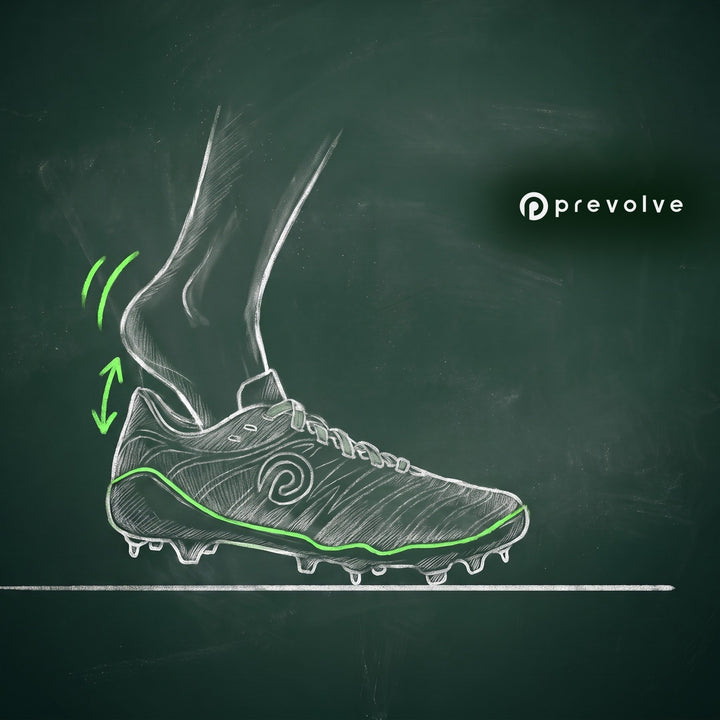
- Your heel lifts when you sprint or push off, even with the laces tight.
- The eyelets nearly touch when you lace up, and the upper bunches into folds across the top of your foot.
- Your foot slides sideways on hard cuts, so you feel the edge of the plate before the cleat turns with you.
- Your toes hit the front on hard stops, even though the length is right.
- You get blisters from rubbing, on the heel or the ball of the foot, rather than pressure pain.
Width isn't one number. A foot can be narrow at the heel and normal across the ball, or have a low instep that leaves a gap over the top no matter how wide the cleat is. Shoe people call the whole package low volume, and most "narrow" feet are really low-volume feet.
How narrow is narrow, in millimeters?
A study of 1,200,847 in-store foot scans looked closely at one common length, a 270 mm foot. Among people with that same length, the middle 90% had forefoot widths from 94.4 to 110.2 mm. The narrowest feet in the data were down at 84.1 mm. Heel width ran from 61.2 to 73.9 mm across the middle 90%.
The same paper found that one stock width fits at most 40.1% of feet at a given length. Most cleats come in exactly one width. If you live in the narrow tail, you were never in that 40%.

Why there are no narrow cleats
Walk into a store and you'll find "wide" on a few models, mostly New Balance's 2E versions. You won't find a cleat labeled B or AA. Narrow widths exist in dress shoes and some running shoes; in cleats they basically don't.
The reason is boring. Every extra width means another set of lasts and soleplate molds and another row of inventory, so brands make one width per model and call their slimmest model the narrow option. That model is the speed boot, built slim to save weight. Being told your fix is a speed boot is a bit like being told the answer to a loose belt is a lighter belt.
We go deeper on lasts and tooling in why custom fit cleats exist.
The narrowest cleats you can buy
Trying off the shelf first is completely reasonable. Start with each brand's speed line, because those sit on the slimmest lasts the brand makes.
- Nike Mercurial Vapor (soccer). Widely described as the lowest-volume boot in Nike's range. If the Vapor is loose on you, nothing else Nike sells will be tighter.
- adidas F50 (soccer). Slim through the midfoot with a tapered toe.
- Speed and skill-position lines in football and baseball. Same idea: each brand's lightest cleat is usually its slimmest.
One warning: knit and laceless uppers relax as they break in. A laceless boot that feels snug in the store often feels looser three weeks later. For a narrow foot, laces are your friend, because they let you tension the midfoot yourself.
How to make cleats fit narrow feet
These work in the cleats you already own. Try them in this order.
Lace for your heel
Use the heel-lock lace, sometimes called a runner's loop. On each side, take the lace up into the top eyelet from the outside without crossing it, leaving a small loop. Then cross each lace over and feed it through the loop on the opposite side, and pull down and back before you tie. It pulls the collar around your ankle and is the single best fix for heel lift.
Fill the volume, not the length
A thicker game sock, or a thin sock under it, takes up space everywhere. A thin full-length insert under the stock insole lifts your foot into the narrower top of the upper. Adhesive heel grips and tongue pads cost a few dollars and do exactly what they say.
The trade-off: everything you add sits between you and the ground. Your foot rides a little higher and feels the turf a little less, so add only what you need.
Should you size down?
Nike suggests that players with narrow feet may want to go half a size down, and it can help, because a shorter last is also a slightly narrower one. But your toes still need their length. Stand up in the cleat: your toes shouldn't touch the end, and they shouldn't hit it when you stop hard. If sizing down fixes the heel but jams the toes, you've traded one problem for another, and black toenails are a bad trade.
Why a loose cleat costs more than comfort
A cleat that's too wide doesn't hurt the way a tight one does, so it's easy to shrug off. But every millimeter your foot moves inside the cleat is a millimeter before the studs start working. On a cut, the foot slides first and the cleat turns second. You feel that as a half beat of delay, and as a cleat that seems to grip worse than it does.
That movement is also where rubbing blisters come from, and it's why so many narrow-footed players crank their laces until the top of the foot aches instead. That's my read from fitting a lot of feet, not a lab result, but I've yet to meet a player who plays better in a shoe they're sliding around in.
When nothing fits, build it from your foot
This is where I'm biased, because it's what we do. We're known for wide feet, but the process doesn't care which direction you are from average. Narrow is just another shape.
- Scan your feet with your phone. The scan captures heel width, instep height and forefoot width, the three places a narrow foot usually differs.
- Try a fit sock first. We 3D print a fit sock straight from your scan in 1 to 2 days and ship it in 1 to 2 more, so it usually arrives in 3 to 5 days. It's the shape of your cleat without the plate, so you find out whether your heel stays put before anything gets built. The $145 is credited toward your first pair.
- Take room away in the Fit Adjuster. In your account, pick a point on the fit sock (heel width, instep height, the sides of the forefoot) and take away room in 2 mm steps. If your largest change is over 4 mm, we reprint your fit socks for another try. Four millimeters or less goes straight to production.
- We build your cleats around that approved shape and ship them in 4 to 5 weeks.
Custom-fit cleats start at $595 for adults. Kids' pairs start at $245, with no minimum size. Custom isn't for everyone, and a kid who will grow two sizes by spring may be better served by the lacing fixes above for a season.
Narrow feet and cleats: quick answers
Are Nike Mercurial Vapors good for narrow feet?
They're usually the best mainstream starting point, because they're among the narrowest cleats sold. If your foot still slides in a Vapor that's the right length, an off-the-shelf cleat probably won't get much tighter. Try heel-lock lacing and a thicker sock first, then look at custom.
Do any cleats come in narrow widths?
Not that we've found. A few models come in wide (2E), but cleats labeled B or AA basically don't exist. The narrowest option is each brand's speed line.
Why does my heel slip in my cleats?
Usually your heel is narrower than the cleat's heel cup, or a low instep lets your whole foot slide forward. Heel-lock lacing, heel grips and a thicker sock fix most cases. If none of them do, the heel shape itself is the problem.
Should I size down in cleats if I have narrow feet?
Half a size can help, since a shorter cleat is also slightly narrower. Never go so short that your toes touch the end when you stand or stop hard.
Are laceless cleats good for narrow feet?
Usually not. Laceless cleats rely on a stretchy collar and upper that loosen with wear, and you can't tighten them. Laces let you pull the midfoot in where you need it.
What cleats are best for kids with narrow feet?
Start with a speed-line cleat in a youth size, laced with a heel lock and worn with a thicker sock. If the heel still slips, that's the same problem adults have, and custom-fit kids' cleats are an option at any size.
Related: best cleats for wide feet, soccer cleat comfort and will better cleats make you a better player?
