
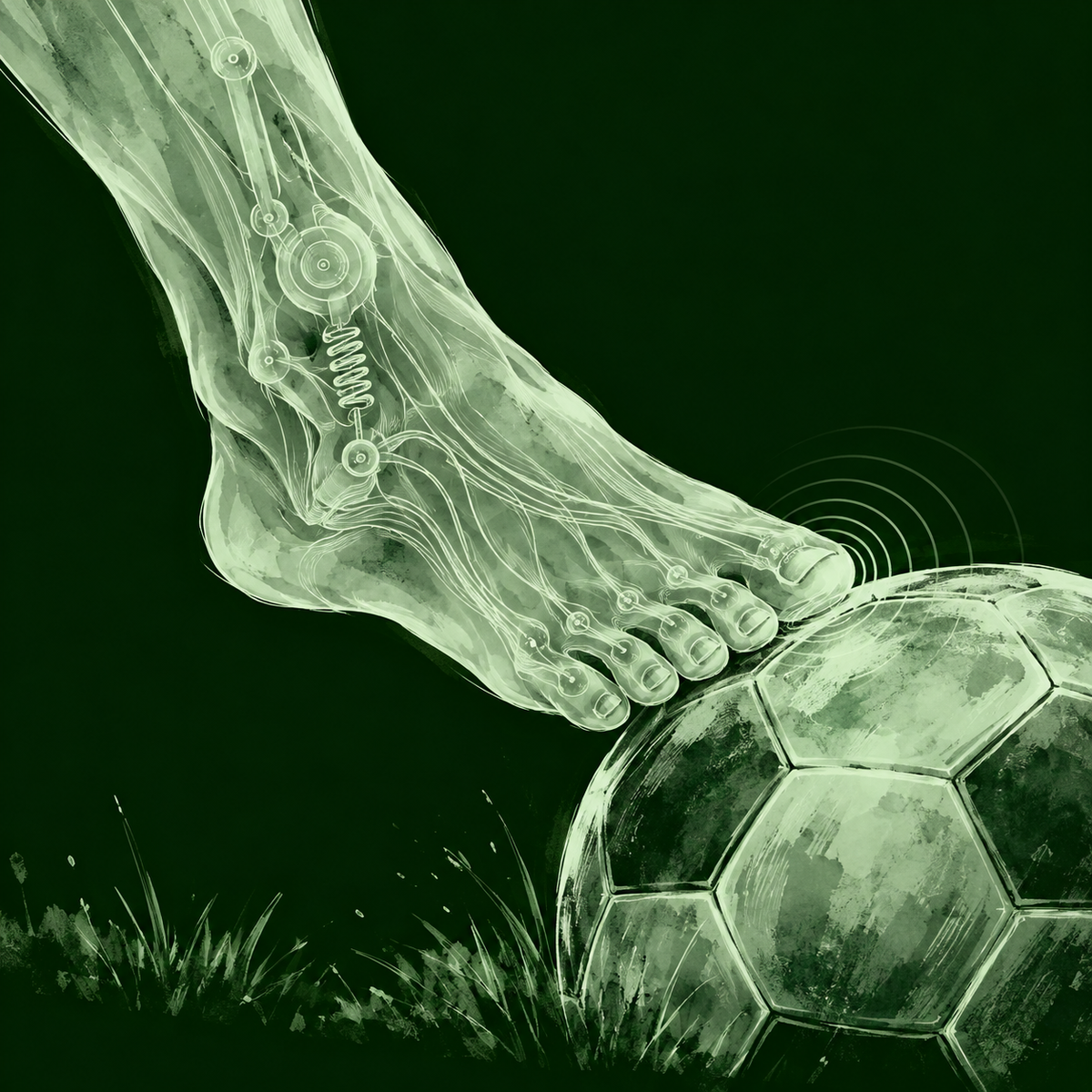
I believe barefoot training makes you a better athlete. It changed how I train, helped me get back to enjoying soccer, and is a big part of why Prevolve exists.
I grew up playing in narrow cleats. I had patellar tendinosis in both knees, a bunion, and two knee surgeries that didn't solve the problem. For me, the turning point was taking the cleats off and running on grass. Twenty years later, I still play two or three games a week.
That experience shapes how I design shoes. I want the foot to do as much of its own work as possible. Traction, cushioning and protection have their place, but I don't believe a shoe can replace a strong, capable foot.
Train your feet like the rest of your body
We train our legs, our lungs and our coordination. Then we put our feet in shoes and act as if they don't need the same attention. That has never made sense to me.
In my own training and in conversations with customers, strength, balance and a better sense of where the foot is come up again and again. That last part is proprioception: knowing what your foot is doing without having to look at it. Those are the qualities I want athletes to develop.
I also see movement as part of recovery. I believe getting the foot working matters for circulation and for rebuilding confidence in a foot that has been painful. It isn't a promise that barefoot training will heal every injury.
A foot that can move, respond and produce force is worth training. I don't want the shoe doing more of the job than it needs to.

There is research behind foot-strength training, too. Studies have reported gains in foot muscle size and strength and improvements after loaded toe-flexor training.
What changes when a ball is involved
Soccer asks your feet to do more than cover ground. They also control and strike the ball, which is why I practice some ball work barefoot.
Players spend years training and competing in soccer cleats. How those cleats fit deserves attention, especially as young players' feet grow.
Barefoot ball work brings me back to the contact itself: where the ball hits, how firm I hold my ankle, and how I position the foot. The difference is immediate enough to feel. Learning to control it takes practice.
I still wear cleats for matches. I want traction and protection when I'm competing, and I want the foot inside the cleat to be prepared for the work.
Stronger feet still need cleats that fit. I discuss that relationship in Will Better Cleats Make You a Better Player?
What I want a shoe to do
I'm not against shoes. I make them. Studs help on a wet field, an upper protects your foot, and cushioning can make some situations more comfortable.
But those benefits involve choices. More material between you and the ground changes what you feel. A stiffer construction changes how the foot can move. A close-fitting upper has to hold you securely without squeezing your toes out of position.
My concern is what those choices mean after years of playing. I want to keep using my feet well as I get older. That's why I train barefoot and build cleats around the foot: I want the useful parts of a shoe without giving up the movement and feeling I value.
Build up gradually
Believing in barefoot training doesn't mean rushing into it. I want you to build the capacity to enjoy it and keep doing it.
Changing footwear changes the demands of training. A study of runners transitioning to minimalist shoes is one reason to take the buildup seriously. A full match or a long run is not where I would start.
Our Foot Training Plan for Athletes has six levels. An assessment sets your starting level, and each level ends with a foot-function test. The plan uses those tests and how the work feels to guide progression, rather than assigning a new level to a particular week or month.
The training covers balance, massage and stretching, coordination and foot strength, ankle mobility, walking and running, leg strength, and jumps. Each level also explains how to apply the work to your sport. Most exercise blocks use paired movements, with space to record your reps and completed sessions.
That gives the training a structure without making everyone follow the same calendar. The goal is to build from your starting level and track how you respond.
The foot strength level guide introduces our approach. The training plan provides the exercises, level tests and session logs. Toe spacers are an optional part of the wider fitting and training process.
A barefoot session worth doing
You don't need a new set of soccer skills to train barefoot. Start with familiar ball work: juggling, passing and dribbling. Fit the amount to the training you've already done.
The blocks below add up to 50 minutes. This is an example of soccer ball work to use alongside the foot training program. Select individual blocks to fit your training level; the full sequence is not a starting dose.
- 5 minutes of easy movement: ankle circles, heel-to-toe rocking, single-leg balance
- 5 minutes juggling, right foot only
- 5 minutes juggling, left foot only
- 5 minutes juggling alternating, moving while you do it
- 10 minutes of wall passing, changing distance and weight of pass, both feet
- 10 minutes dribbling the touchline with skill moves, jogging the goal lines between
- 5 minutes of easy juggling to finish

Pay attention to how your contact with the ball changes as the session goes on. The point of these drills is controlled practice, not completing every block at any cost.
Shooting barefoot feels different from shooting in a cleat. I treat it as a separate skill to practice, rather than assuming that comfortable juggling means I'm ready to strike hard.
What to take into your training
- Choose a progression. Use the foot strength level guide as the starting point for discussing your training.
- Practice deliberately. Juggling, passing and dribbling let you explore ball contact without turning every session into a match.
- Train the foot itself. Make room for balance, coordination and strength work alongside your time on the ball.
- Check your cleats, too. As you train your feet, pay attention to how your match cleats fit. Our foot scanning page explains what we measure.
Stronger, more capable feet are worth working for, and barefoot training is central to how I do that. Take the progression seriously, give it time, and pay attention to what changes in your own game.
Daniel Pena is a long time soccer coach and trainer. You can find more of his work at the Art of Football Blog and his coaching site, Coach Daniel PT.