

El entrenamiento barefoot y minimalista tiene una base de investigación real detrás: jugadores de fútbol, jugadores de hockey sobre césped, poblaciones generales de entrenamiento de fuerza, todos muestran ganancias medibles en fuerza del pie, equilibrio y estabilidad. Pero si buscas la misma investigación en jugadores de fútbol americano, no encontrarás casi nada. Ningún estudio controlado en atletas de gridiron. Ningún artículo del JSCR que compare ejercicios barefoot contra tacos para el rendimiento de cambio de dirección en linebackers o receptores. Es un vacío extraño para un deporte tan investigado en casi todos los demás aspectos. El fútbol americano tiene una de las literaturas de fuerza y acondicionamiento más estudiadas de cualquier deporte del mundo, y esta pregunta específica simplemente no está en ella.

Entonces, ¿por qué el punto ciego en el entrenamiento barefoot?
Hay algunas razones plausibles, ninguna del todo satisfactoria por sí sola:
- Cultura de responsabilidad legal. El fútbol americano ya carga con más escrutinio por lesiones que casi cualquier otro deporte: conmociones, lesiones articulares, traumas por contacto. Un programa o investigador que proponga "hagamos que los atletas entrenen sin calzado" está proponiendo algo que se lee como un riesgo añadido para una institución que ya defiende su historial de seguridad, incluso si el perfil de lesiones real de ejercicios barefoot cortos es leve comparado con lo que estos atletas ya absorben con las hombreras y protecciones.
- El equipo es el deporte. Los tacos, las protecciones y el césped son tan centrales estructuralmente en cómo se juega que "fútbol americano barefoot" suena como un error de categoría para muchos entrenadores e investigadores: quizás valga la pena estudiarlo como herramienta de entrenamiento, pero culturalmente no se percibe como cercano al fútbol americano, como sí se percibe claramente el entrenamiento barefoot de golpeo de balón como cercano al fútbol.
- La investigación sigue al mercado global. La base de investigación del fútbol es enorme en parte porque se estudia en todas partes, por todos, constantemente: es el deporte más jugado y más financiado del planeta para la ciencia del deporte. El financiamiento de investigación del fútbol americano es real pero más limitado, concentrado en las lesiones y métricas (velocidad, potencia, conmociones) que más les importa proteger a los programas, no en un método de entrenamiento que sigue siendo bastante marginal incluso en sus deportes de origen.
- Puede que simplemente no se haya preguntado todavía. A veces un vacío es solo eso, un vacío. Nadie ha hecho el estudio porque nadie lo ha propuesto, no porque haya una razón de fondo para no hacerlo.

Lo que sí sabemos, de los deportes que sí se han estudiado
Una revisión sistemática de 2025 sobre entrenamiento de fuerza con calzado barefoot y minimalista en poblaciones atléticas encontró que la mayoría de las intervenciones produjeron ganancias reales en el volumen de los músculos intrínsecos y extrínsecos del pie, la función del arco, la fuerza de flexión de los dedos y el control neuromuscular. La investigación sobre calzado minimalista en otros contextos ha encontrado aumentos significativos en la fuerza del pie con el uso sostenido, además de mayor activación de los glúteos al caminar y correr: evidencia de que los efectos llegan más arriba en la cadena cinética, no solo al pie. Y el entrenamiento barefoot ha mostrado beneficios para el equilibrio y la estabilidad del tobillo específicamente en el fútbol, la evidencia específica de deporte más cercana disponible.
Nada de eso es específico del fútbol americano. Todo apunta al mismo mecanismo subyacente: los pies descalzos obligan a los músculos estabilizadores pequeños del pie a activarse en lugar de dejar que una suela rígida haga el trabajo por ti. Ese mecanismo no es una fisiología específica de un deporte, así que no hay una razón obvia por la que el pie de un linebacker respondería de forma diferente al de un centrocampista. Pero "no hay razón obvia para que no se transfiera" es una hipótesis, no un hallazgo, y vale la pena ser honestos con esa distinción en lugar de tomar prestada la investigación del fútbol para hacer una afirmación que el fútbol americano todavía no se ha ganado.

A dónde deja esto a un jugador de fútbol americano ahora mismo
Hasta que esa investigación exista, la postura razonable es: el mecanismo tiene buen respaldo en deportes cercanos, el entrenamiento en sí (ejercicios cortos, en entornos controlados, trabajo de pies y de corte, solo fuera de temporada) conlleva bajo riesgo cuando se hace con sensatez, y el beneficio potencial (mejor estabilidad del tobillo y control de cambio de dirección, algo que importa en cada posición) vale la pena probarlo por ti mismo, incluso sin un estudio al cual señalar. Solo no confundas "esto probablemente funcione" con "esto está comprobado que funciona para el fútbol americano específicamente". Nadie lo ha demostrado todavía. Alguien debería hacerlo.
Entonces, ¿qué pasa con tus tacos?
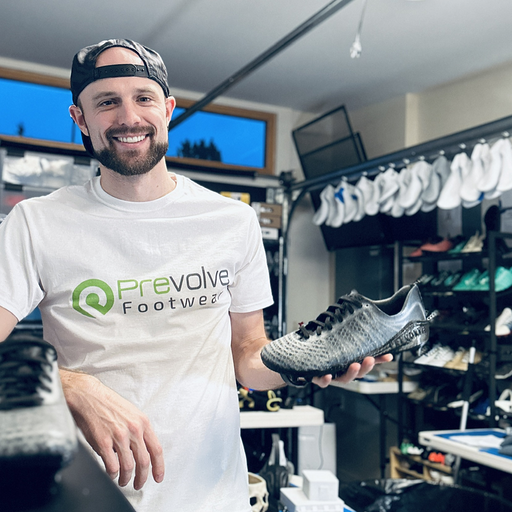
Independientemente de si la investigación sobre entrenamiento barefoot alcanza al fútbol americano específicamente, el problema de calce que expone es real de todas formas: entrenas descalzo o con calzado minimalista, desarrollas esa fuerza estabilizadora, y luego te pones un taco hecho para una forma de pie que no es la tuya (puntera estrecha, horma rígida estándar) y todo lo que acabas de entrenar queda amortiguado por el propio calzado. Ese es el problema específico que los tacos de fútbol americano a medida de Prevolve están hechos para resolver. Un escaneo 3D del pie construye el taco alrededor de la forma real de tu pie, puntera ancha, separación natural de los dedos, una estructura que apoya el trabajo estabilizador de tu pie en lugar de anularlo. Si la idea es nueva para ti, nuestra explicación de por qué importan los tacos a medida cubre el problema del calce con más profundidad, y nuestro artículo sobre tacos de fútbol americano anchos plantea un argumento relacionado específicamente para el gridiron.
